Paperization is the growing shift from plastic packaging to paper-based alternatives as brands seek packaging that better supports sustainability goals, premium presentation, and changing customer expectations. For businesses selling gifts, jewelry, cosmetics, fashion accessories, and specialty products, custom paper gift boxes offer a practical way to combine product protection, brand identity, and tailored packaging design.
By customizing box structures, paper materials, dimensions, printing, finishes, and inserts, brands can develop packaging that reflects their identity while reducing unnecessary plastic components. However, paper is not automatically more sustainable in every application. Material sourcing, coatings, recyclability, durability, and the full product life cycle should all be considered when selecting packaging.
Paperization refers to replacing selected plastic packaging components with paper or paperboard alternatives where technically and commercially appropriate.
Instead of using plastic trays, sleeves, bags, or outer packaging, brands may consider folding cartons, rigid paper boxes, molded-fiber inserts, paper sleeves, and other fiber-based structures.
This trend is particularly relevant to gift packaging because the box itself is part of the customer experience. Packaging must protect the product, communicate brand values, and create a positive first impression.
For B2B buyers, paperization is not simply a material decision. It is an opportunity to develop custom packaging solutions for brands that balance appearance, function, production feasibility, and end-of-life considerations.
Consumers and business buyers increasingly pay attention to packaging materials, waste, and recyclability. Brands therefore have reasons to review where plastic is necessary and where paper-based alternatives could work.
For example, a gift set previously packed in a rigid plastic outer shell might be redesigned with a paperboard box and a paper-based product insert.
The best approach is to evaluate the complete package rather than assuming that one material is always better. Paper sourcing, manufacturing processes, transportation, reuse, and local recycling conditions all influence environmental performance.
Plastic packaging can serve important functional purposes, but custom paper packaging provides extensive opportunities for visual differentiation.
Brands can choose specific colors, textures, box dimensions, printing styles, and finishing techniques to create a consistent packaging identity.
For luxury gifts and jewelry, a rigid magnetic closure box with a custom paper wrap can communicate quality. For e-commerce gift sets, a folding carton with a fitted paper insert may offer a lighter, more space-efficient solution.
These options allow businesses to develop custom eco-friendly gift boxes that align with their positioning instead of relying on generic, one-size-fits-all packaging.
Paperboard can be converted into various packaging formats, including folding cartons, two-piece lid-and-base boxes, drawer boxes, and rigid magnetic boxes.
Each structure serves different needs.
The right design depends on product weight, fragility, dimensions, presentation goals, and shipping conditions.
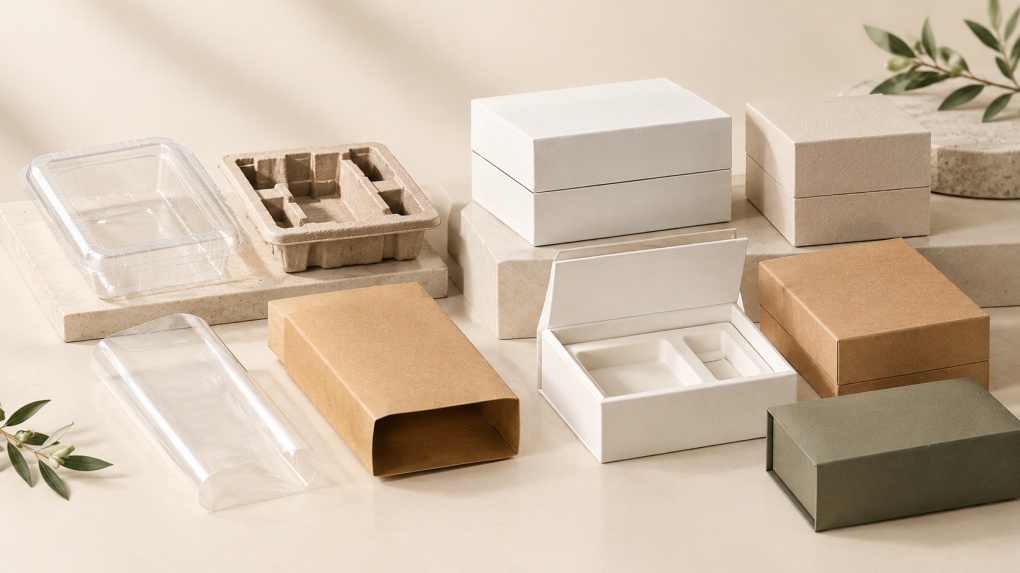
Successful paperization requires more than changing the material specification. It often requires a coordinated redesign of the entire package.
Oversized packaging can waste materials and increase shipping volume. Custom dimensions help create a closer fit around the product while allowing sufficient space for protective inserts.
For e-commerce brands, this can support more efficient packing and transportation. The actual savings depend on carton dimensions, shipping methods, carrier pricing, and order volume.
Different paper grades and board structures provide different levels of stiffness, surface quality, and protection.
Kraft paper may suit natural or understated brand identities. White paperboard supports clean printing and contemporary designs. Wrapped rigid board can create a substantial, premium feel.
Material selection should account for product weight, moisture exposure, stacking requirements, and the intended recycling stream.
A customized paper insert can help organize jewelry, cosmetics, accessories, or gift items.
Depending on the product, options may include folded paperboard supports, layered paper trays, dividers, or molded-fiber inserts.
These alternatives must be tested to confirm that they prevent movement and provide adequate protection. For products requiring moisture barriers, cushioning, or specialized protection, a mixed-material solution may still be appropriate.
Customization can help brands maintain a premium appearance without depending on elaborate packaging components.
Popular options include custom logo printing, embossing, debossing, foil stamping, and carefully selected paper textures.
However, a finish should be chosen with end-of-life requirements in mind. Some metallic foils, plastic laminations, adhesives, and coatings may affect recyclability depending on the material combination and local recycling systems.
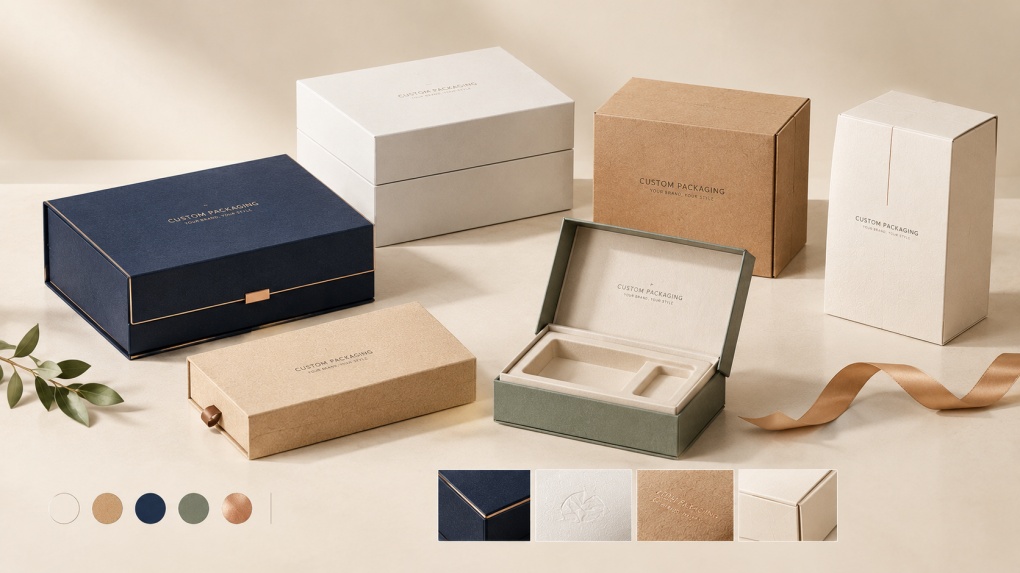
Before approving a large order, businesses should review a physical sample and confirm dimensions, color, construction, insert fit, and closure performance.
Where appropriate, conduct drop, compression, and transit tests. These checks help ensure that a visually attractive box also performs reliably in storage, handling, and shipping.
Neither material is universally better. The best choice depends on the application, required performance, and available end-of-life infrastructure.
| Evaluation factor | Paper-based packaging | Plastic packaging |
|---|---|---|
| Brand presentation | Natural textures, printing, embossing, and premium box structures | Supports clear graphics, transparency, and molded shapes |
| Custom structures | Folding cartons, rigid boxes, sleeves, and paper inserts | Films, trays, molded shells, and flexible pouches |
| Protection | Can provide good protection when appropriately engineered | Can offer moisture resistance, cushioning, and durable barriers |
| Shipping efficiency | Folding cartons may ship flat; rigid boxes can take up more space | Flexible formats may be lightweight and compact |
| End-of-life options | Recycling may be available, subject to coatings, contamination, and local facilities | Recycling depends on polymer type, format, collection, and local infrastructure |
| Key design consideration | Moisture resistance, board strength, coatings, and fiber sourcing | Material type, barrier requirements, reuse, and recovery options |
The most effective strategy is to identify which plastic components can be replaced without compromising product protection, product quality, or customer experience.
Consider a hypothetical jewelry brand that wants to update its packaging for wholesale orders and online sales.
Its original package uses a plastic outer sleeve, a plastic insert, and a generic rigid box. The brand wants a more cohesive presentation and a packaging format better aligned with its sustainability objectives.
A potential redesign could include:
This example illustrates a design approach rather than a verified customer case. Actual material reduction, cost changes, and environmental benefits must be measured against the original packaging specification.
For purchasing teams, a useful supplier brief should include the product dimensions, target order quantity, preferred materials, printing requirements, packaging budget, destination market, and expected protection level.
A professional custom paper box factory can then evaluate suitable structures, provide samples, and recommend practical production options.
When sourcing sustainable paper packaging, buyers should evaluate more than the appearance of a product sample.
Look for a supplier that can:
Request relevant material documentation when environmental claims are important. Avoid relying on broad descriptions such as “100% eco-friendly” without supporting evidence.
The right supplier should help translate a brand's packaging goals into a design that can be manufactured consistently and used effectively.
Paperization is the replacement of selected plastic packaging components with paper or paperboard alternatives where they can meet the required functional, commercial, and environmental criteria.
They can be a suitable alternative, but the outcome depends on sourcing, production, transportation, durability, reuse, coatings, and local recycling infrastructure. A life-cycle assessment can provide a more reliable comparison for specific applications.
In many applications, yes. Custom paperboard trays, dividers, folded supports, and molded-fiber inserts may replace conventional plastic inserts. The replacement must be tested for fit, cushioning, and product protection.
Yes. Rigid box structures, premium paper textures, custom colors, embossing, and thoughtful interior layouts can create an elevated presentation. Finishing choices should also consider recyclability requirements.
Prepare your product dimensions, reference images, quantity, preferred box style, branding artwork, material preferences, and target budget. A packaging supplier can use these details to recommend a structure, prepare a prototype, and confirm production specifications.
Airetion is a professional custom paper box factory specializing in tailored paper packaging solutions for business customers. We help brands explore custom gift box structures, paper materials, dimensions, printing, finishing, and interior inserts to meet their product and branding requirements.
Whether you need premium rigid gift boxes, folding cartons, magnetic closure boxes, or customized paper packaging for jewelry, gifts, and specialty products, our team can work with you from design development and sampling through bulk production.
Looking for a reliable custom paper packaging partner? Contact Airetion to discuss your project, request a customized solution, and explore packaging options for your brand.
Airetion | Custom Paper Packaging for Global Brands
OEM/ODM · Factory Direct · Custom Design


Diritto d'autore © 2026 XIAMEN AIRETION TECHNOLOGY CO. LTD.. Tutti i diritti riservati .




 IPv6 network supported.